building adyen sans
most companies rent their typeface. we built one.
00
problem
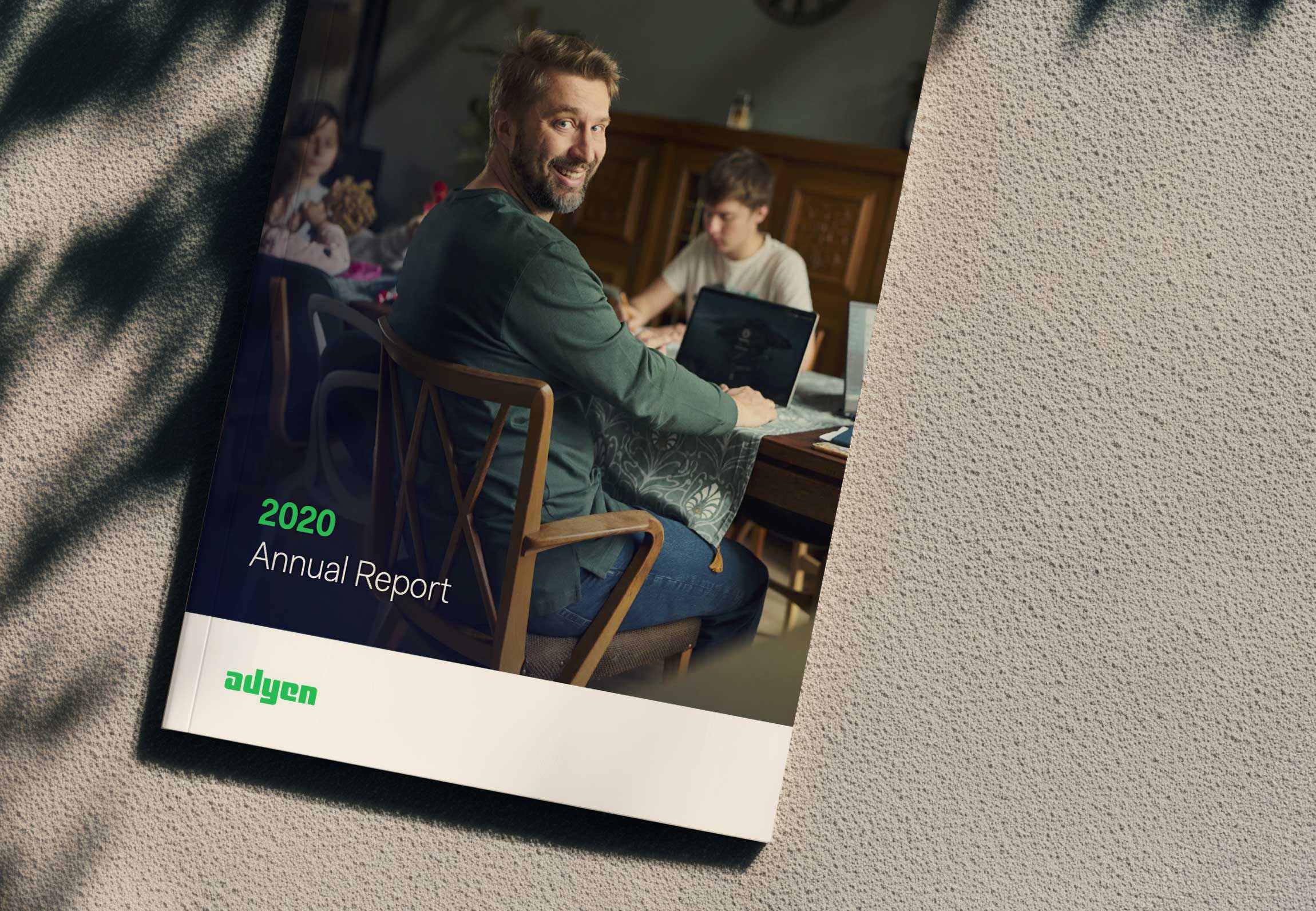
The font we'd been using for years wasn't built for the company we'd become. Fakt was a print-era typeface licensed per user, which worked when we were a scale-up in Amsterdam, but not when we were operating across 30+ countries, running 450,000+ payment terminals, and opening offices across the globe. It didn't render well at small sizes on digital screens. It didn't support scripts outside of Latin. And every new employee, every new terminal, every new product touchpoint added to the license cost. We were paying more every year for a font that was holding us back. The strategic problem ran deeper. As a global fintech, our brand touches more screens than most consumer companies, dashboards, terminals, reports, product interfaces, marketing. If the typography doesn't work everywhere, the brand doesn't work everywhere. And relying on a third-party license for something this foundational meant we never truly owned our own voice.
solution
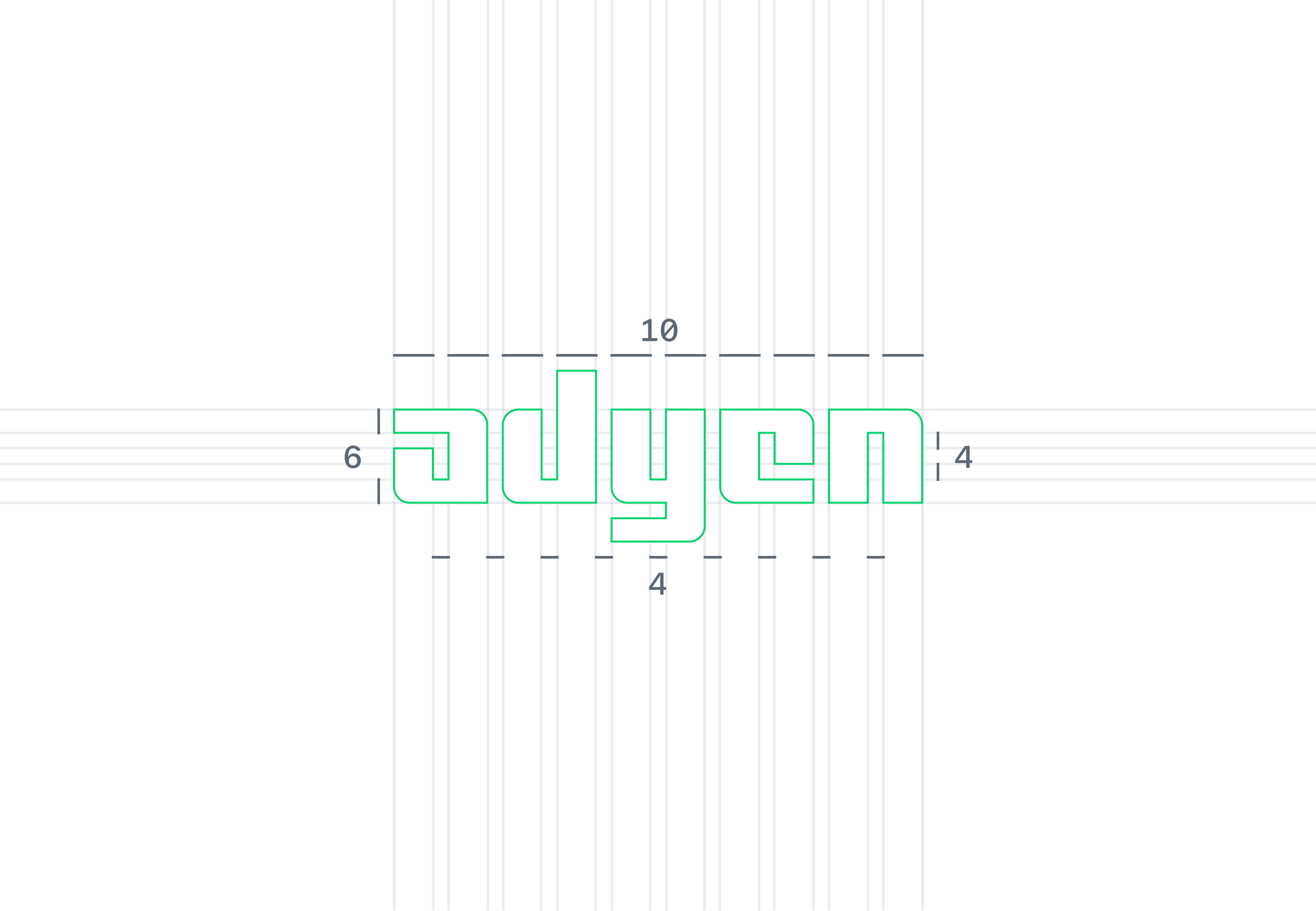
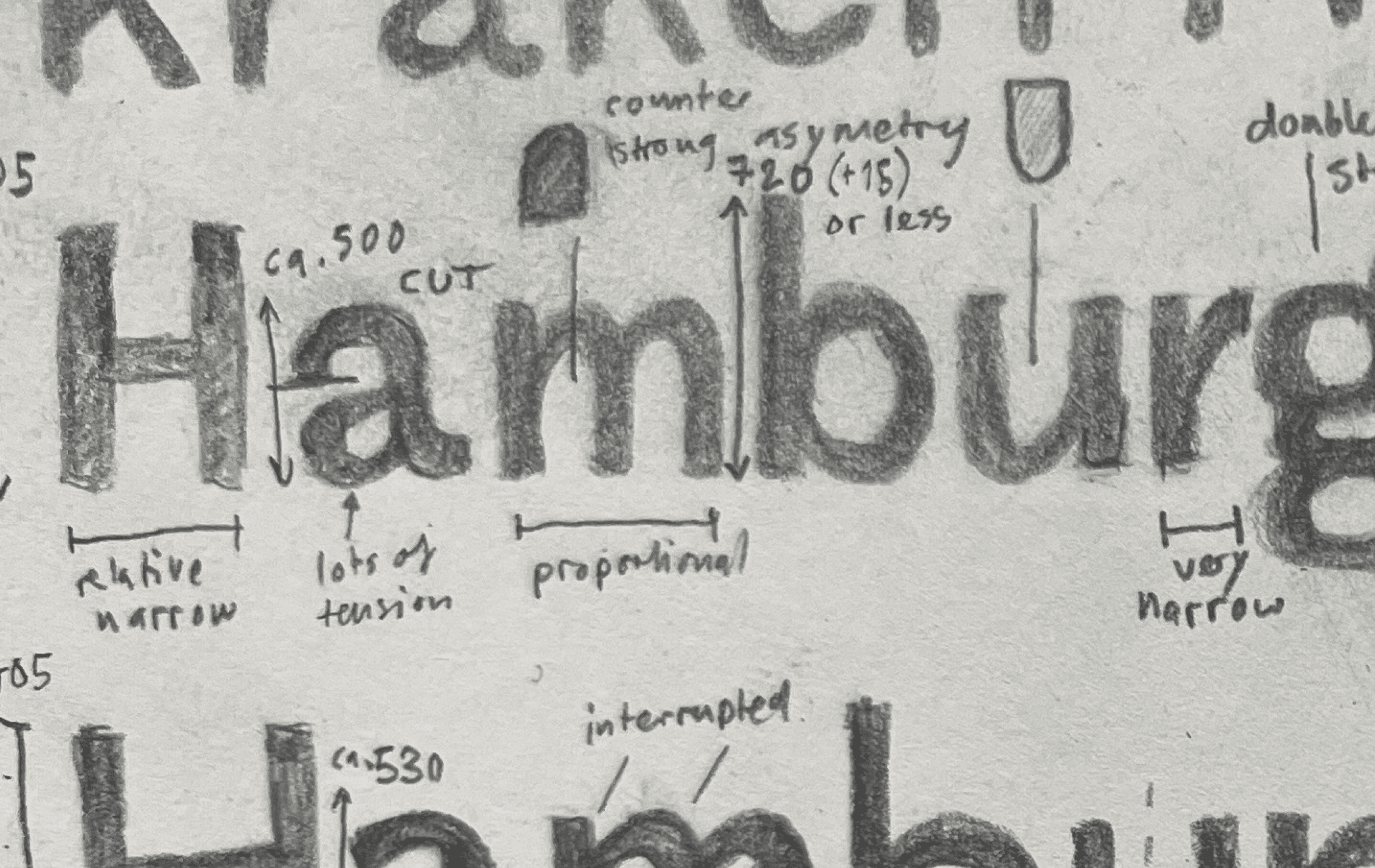
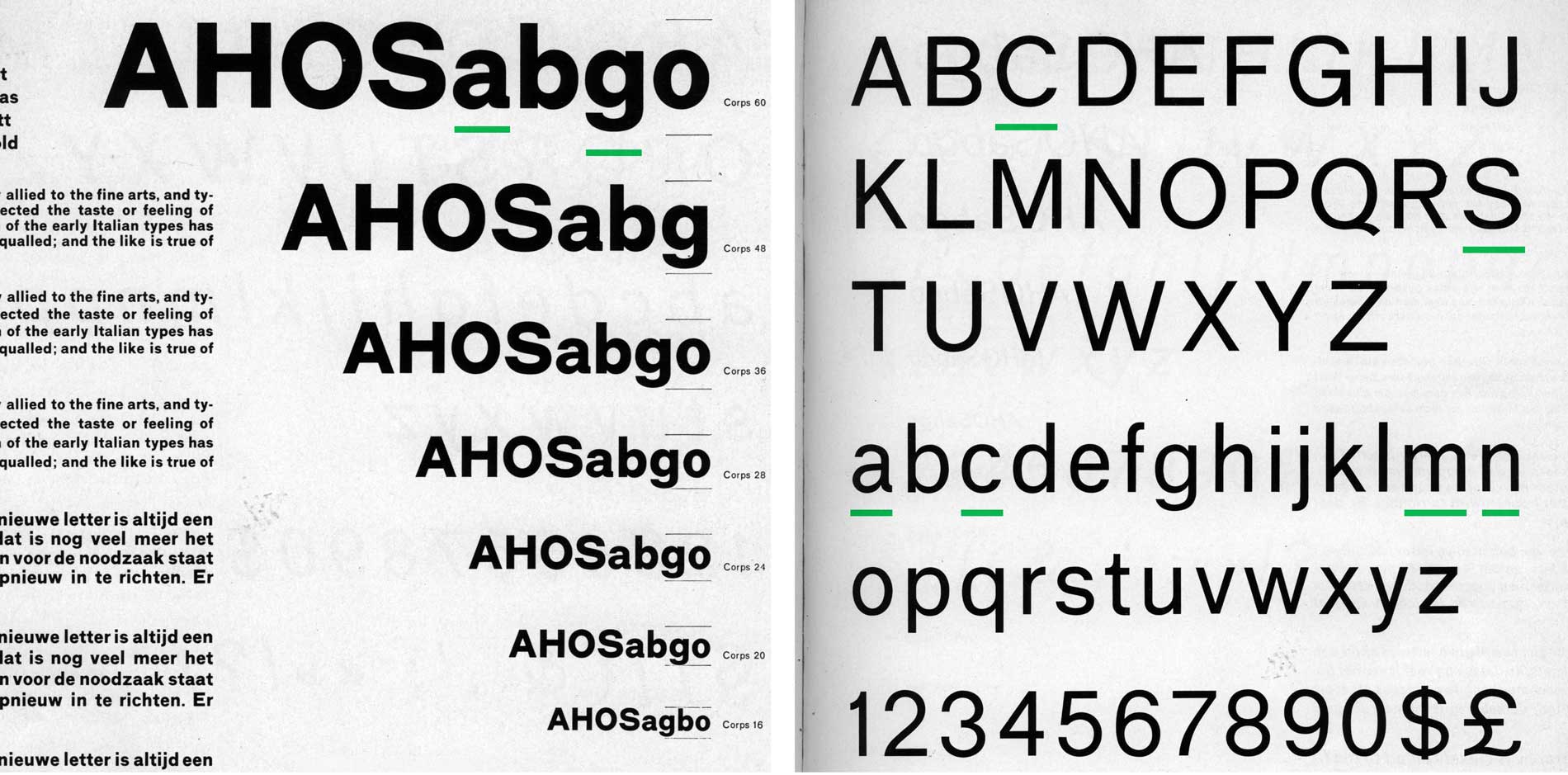
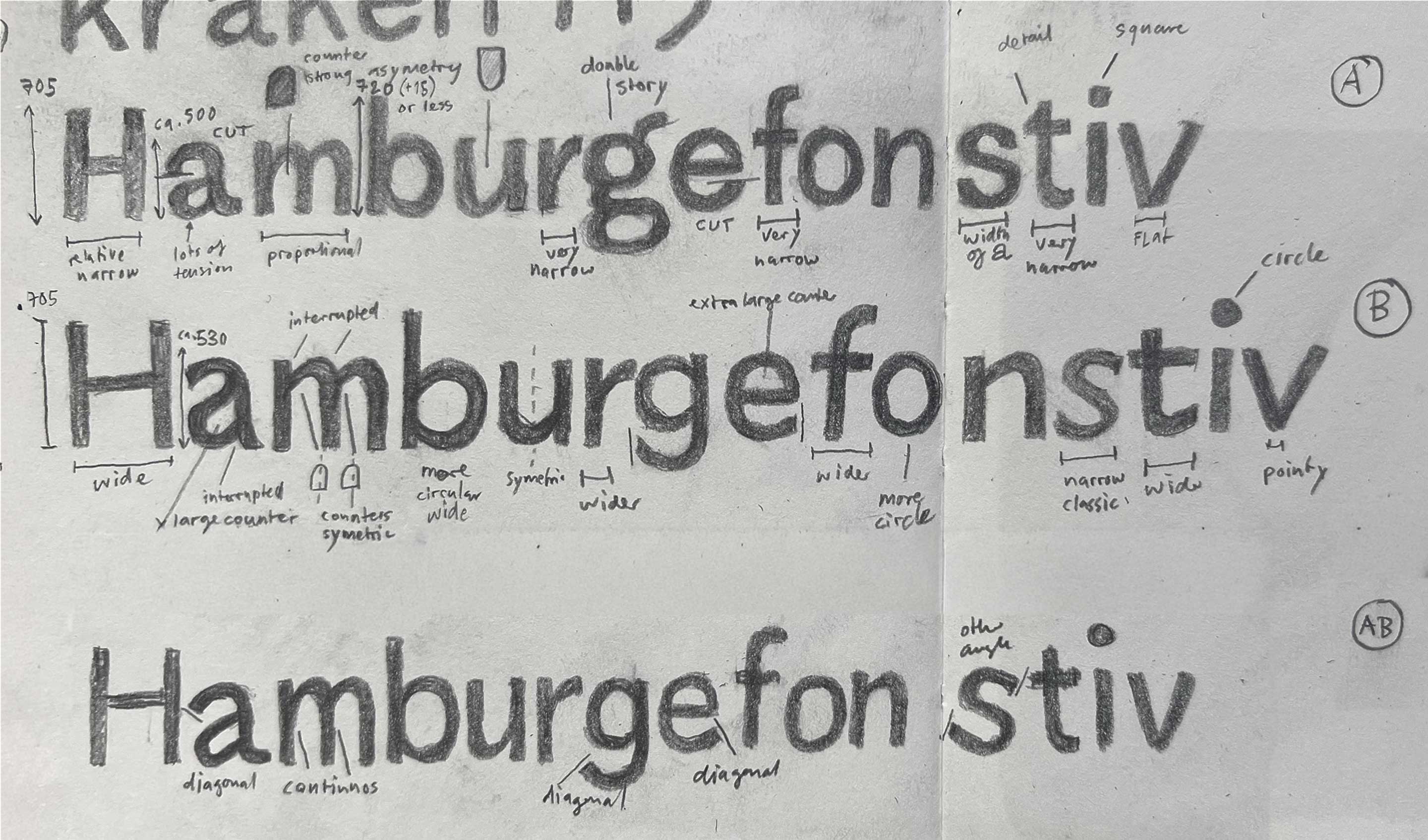
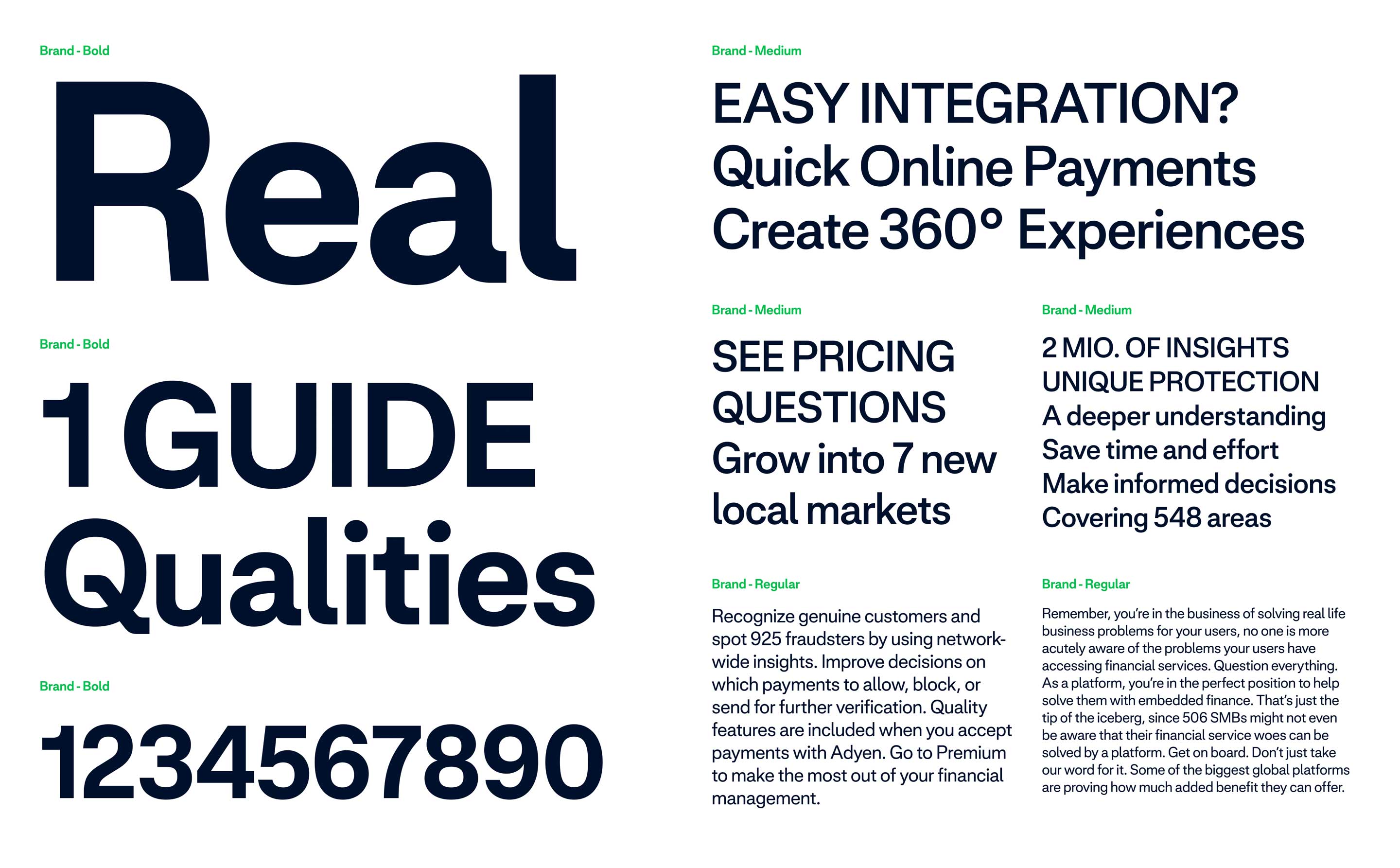
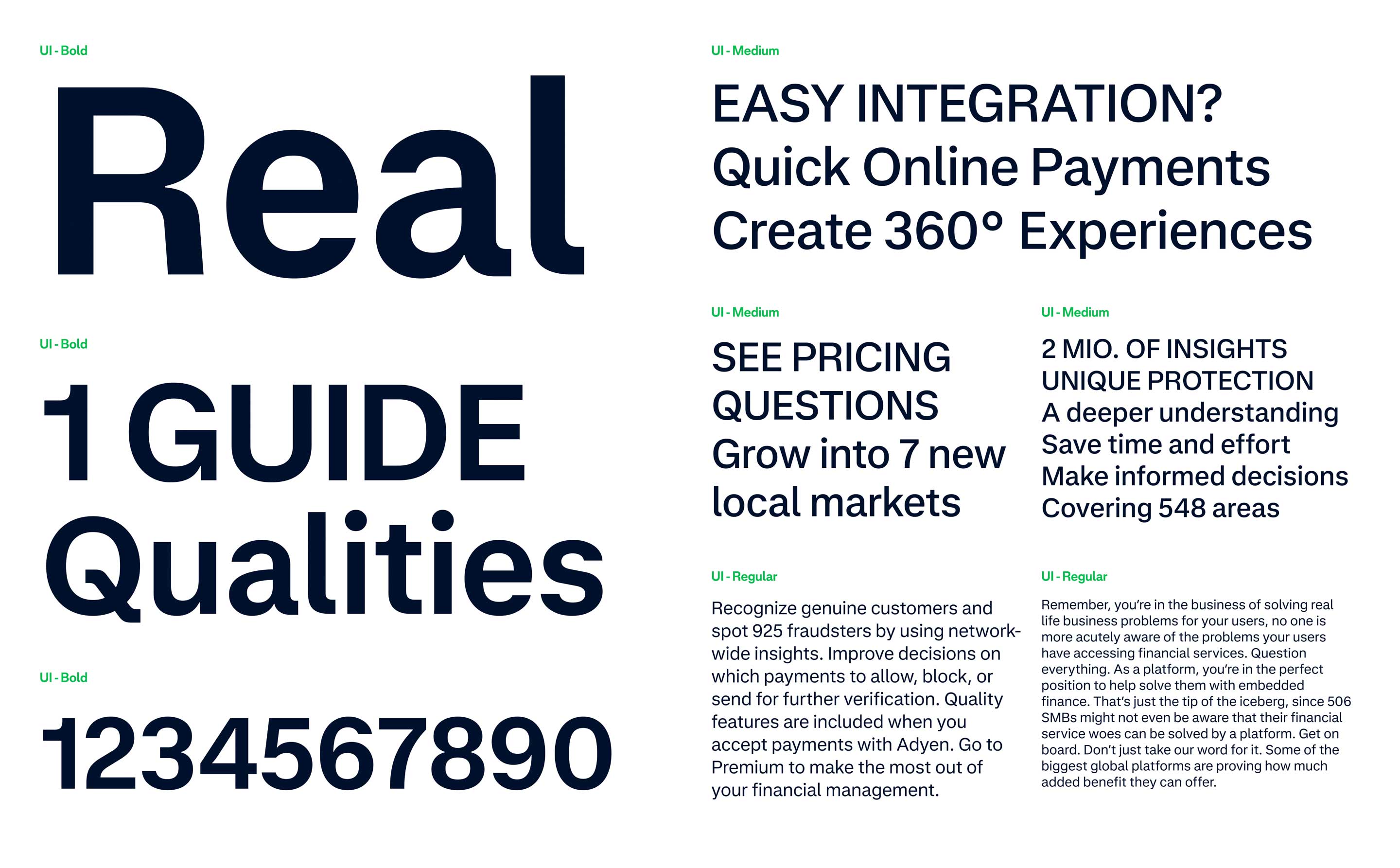
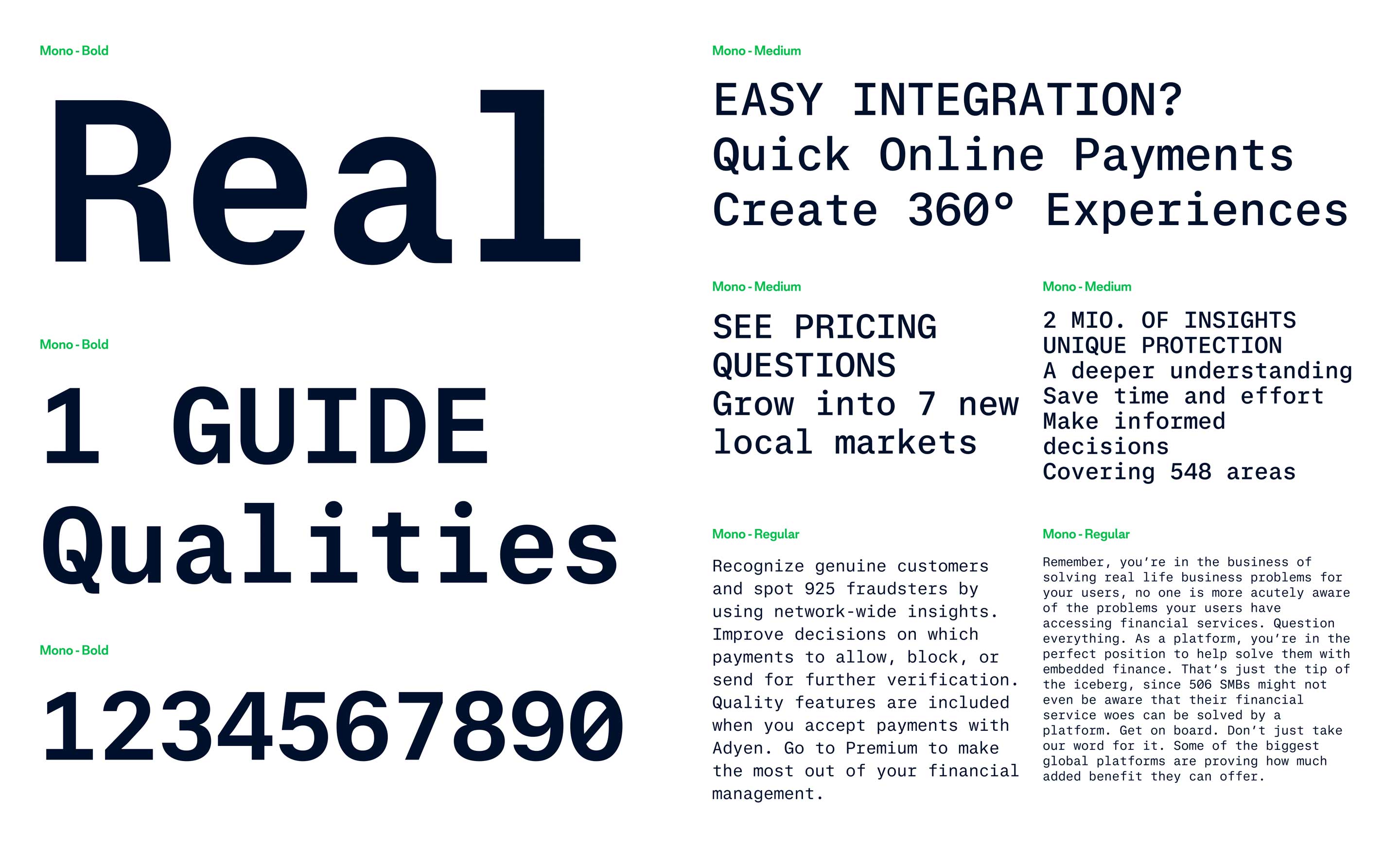
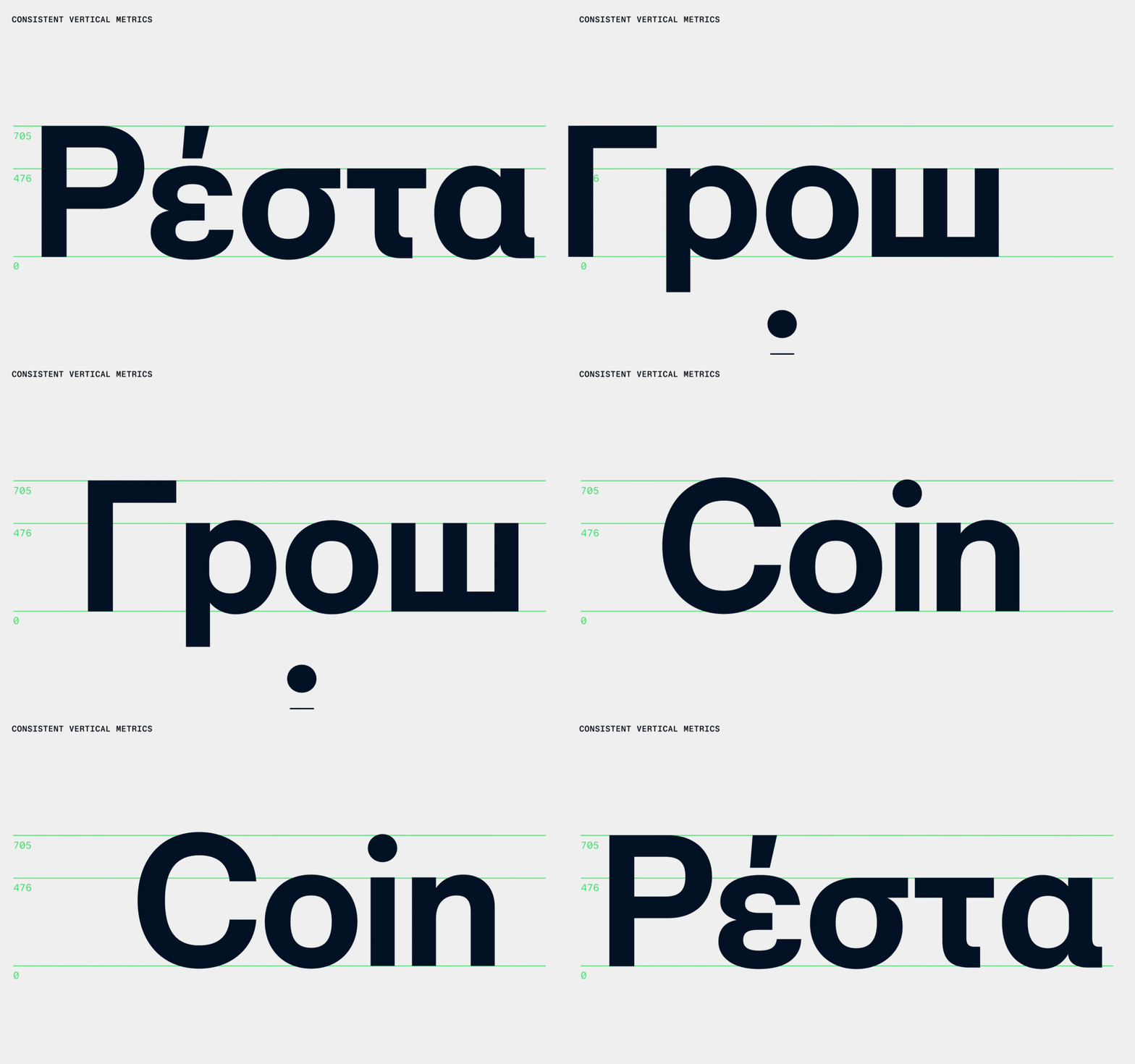
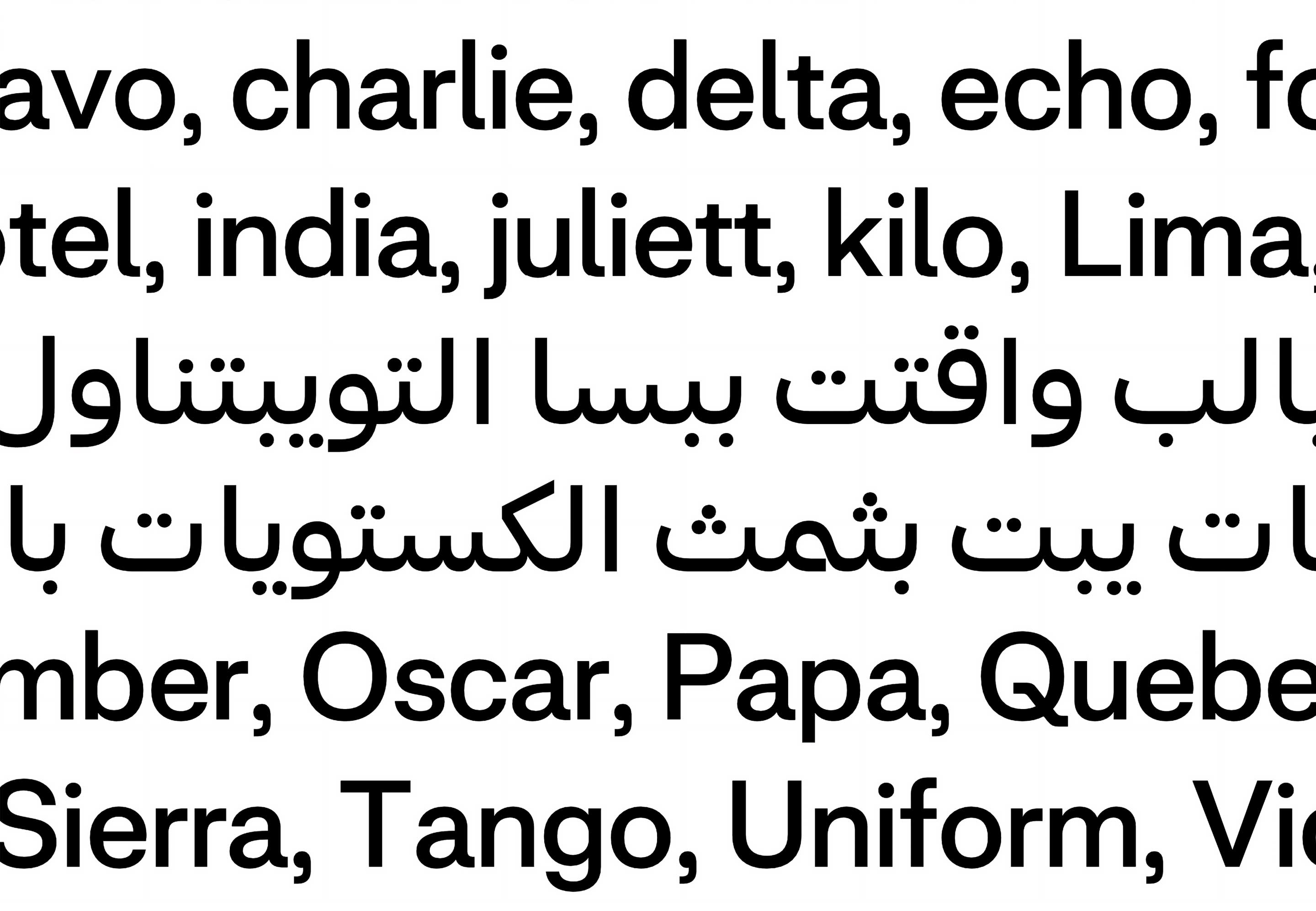
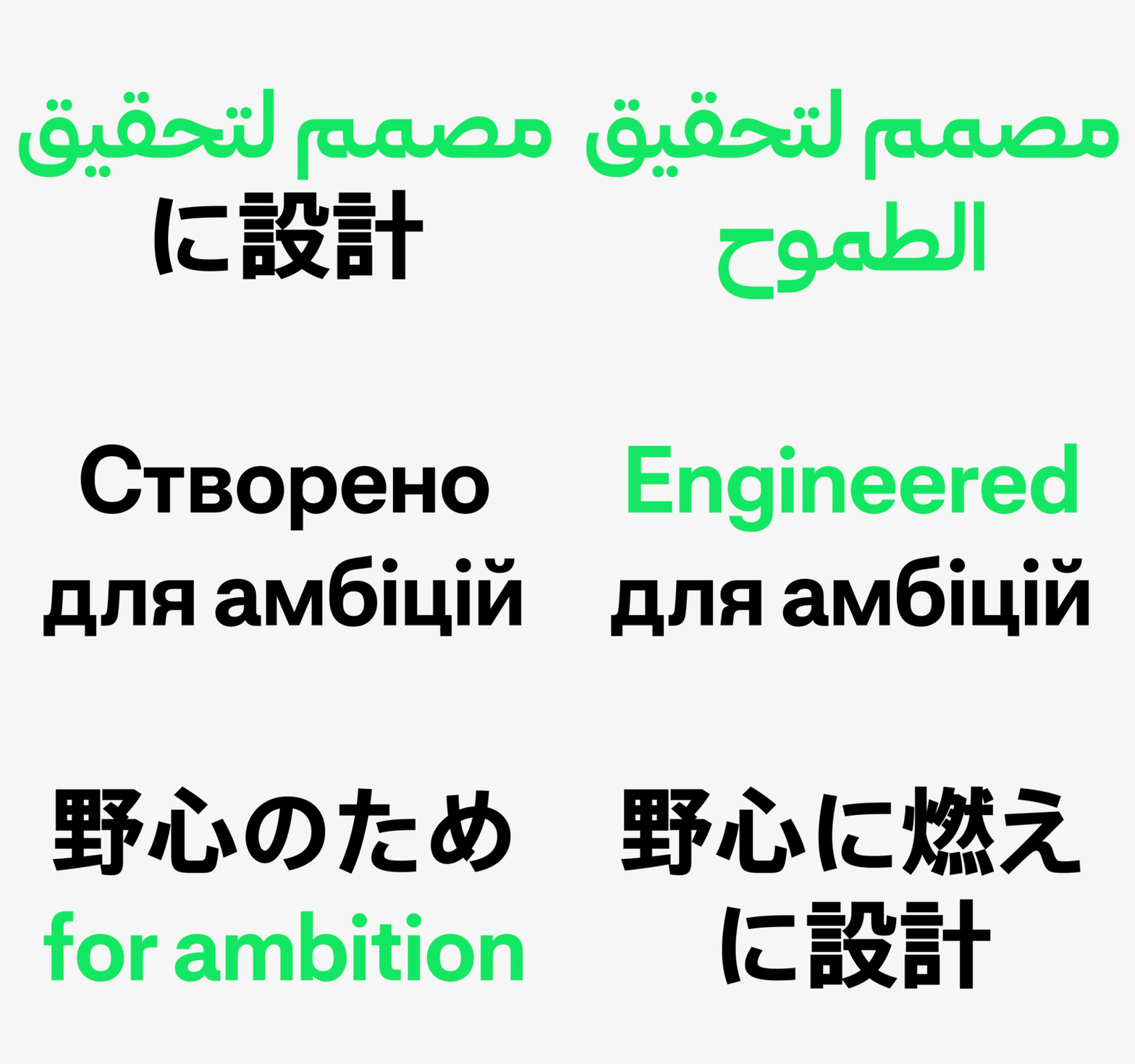
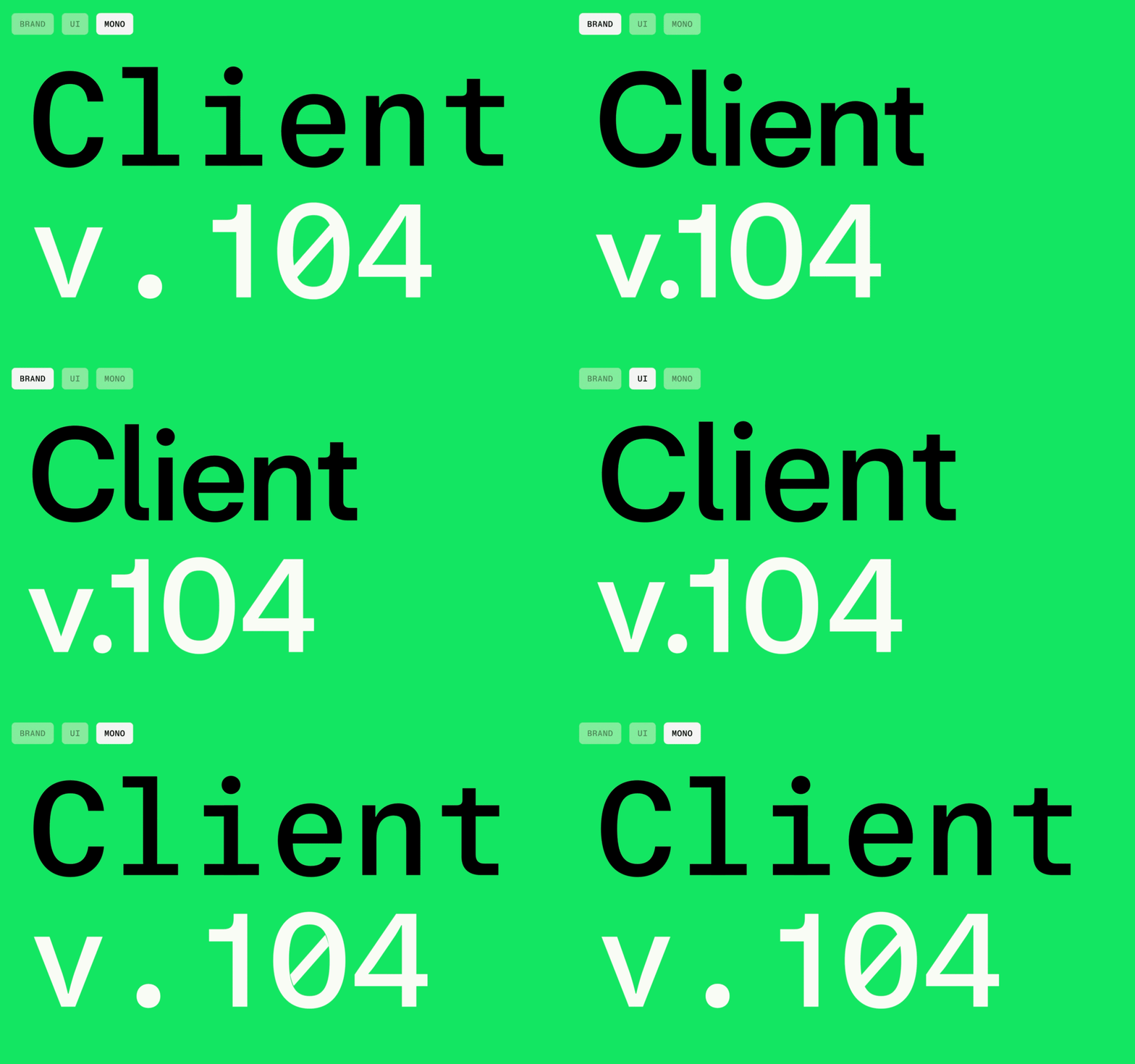
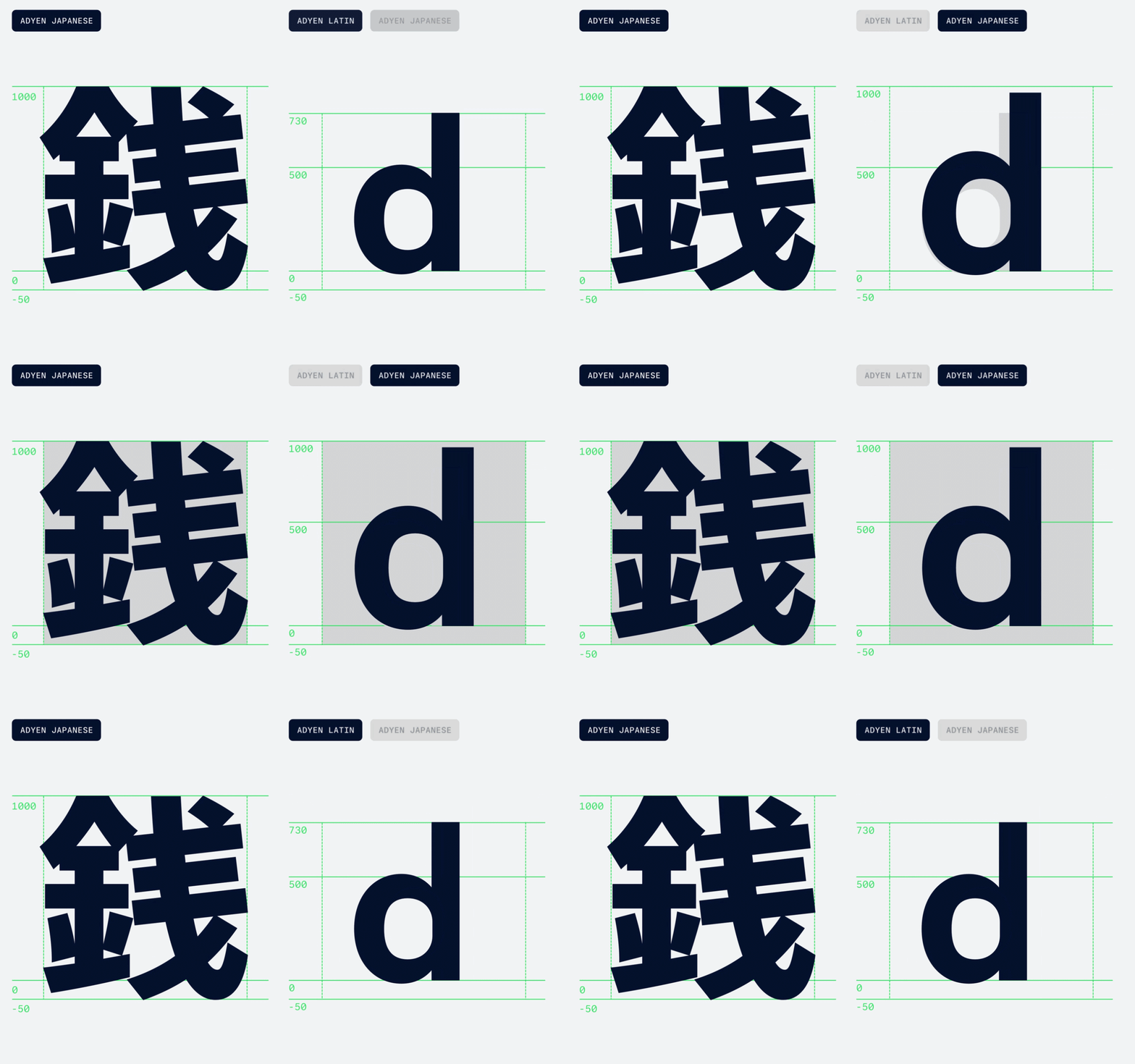
We commissioned a bespoke variable font system, built from the ground up by Grilli Type in Zurich. The design philosophy came directly from our brand platform: Engineered for Ambition. Engineered in the mathematical precision and sharp grid foundations. Ambition in the subtle rounded inner corners and forward momentum that make it feel human, not clinical. The Latin foundation draws quietly from Dick Dooijes' Mercator (Amsterdam's answer to Helvetica) as a nod to where Adyen comes from. From there we extended it properly. Arabic, with its inverse horizontal contrast handled correctly. Hangul, with its modular syllable structure respected rather than forced into a Latin framework. A variable font format that scales automatically to optimize legibility across screen sizes. And a deliberate split between Adyen Sans Brand (expressive, for communication) and Adyen Sans UI (optimized for small-scale clarity on dashboards and terminals), plus a technical Mono companion. The vendor evaluation was as much about the business as the craft. We looked at five studios, across four different licensing models, one-time fees, annual licenses, per-user fees, fixed-term contracts with unknown renewal costs. Grilli Type was the only one that offered full ownership of a functionally complete system, with variable font support built in, and a price structure that didn't punish us for growing. We own our typeface. It works across every script, every screen, every surface we ship on. It scales without license fees scaling with it. It replaced a fragmented stack of third-party fonts with a single, unified voice — giving Adyen what most enterprise companies never get: a proprietary piece of brand infrastructure that belongs to us.
This is a project I'm especially proud of, but also one that took the most convincing internally. Spending serious money on a custom font isn't an obvious line item. The instinct is to keep paying the annual license and move on.
The argument I had to make was that we weren't buying a font. We were buying an asset. Licensed fonts get more expensive the more successful you become — every new employee, every new terminal, every new market adds to the bill. With over 450,000 terminals in the field and a company growing fast, the math stopped working years ago. Owning the typeface turned a growing operational cost into a one-time investment with infinite usage.
But the financial case was only half of it. The other half was strategic. A bespoke typeface is one of the few pieces of brand identity that genuinely can't be copied. Competitors can mimic your colors, your tone of voice, your campaign style. They can't mimic your typography, because the letters themselves are legally and structurally yours. For a company whose brand promise is reliability and precision, typography is one of the highest-stakes brand decisions you can make. Every dashboard, every receipt, every merchant statement is a typography moment.
Working with Grilli Type was a masterclass in craft. These are people who think about the counter-space inside a lowercase 'e' for weeks. Getting Arabic right meant rebuilding the contrast logic from scratch. Getting Hangul right meant respecting a completely different grid system. The variable font technology (where weight and optical size flex on demand) is the kind of thing that sounds minor until you see a number render at 8 pixels on a terminal screen and it's still legible, still feels like Adyen.
The part I'll never forget is the first time I saw Adyen Sans on a terminal in a store. Same font, same feeling, same brand, but now running on our own hardware, licensed to nobody, built from the letter up for what the company actually needed.
Most companies rent their typeface. We built ours. And once we've done it, going back doesn't make sense.
year
2023
category
Art direction
01
02
03
04
05
06
07
08
09
010
011